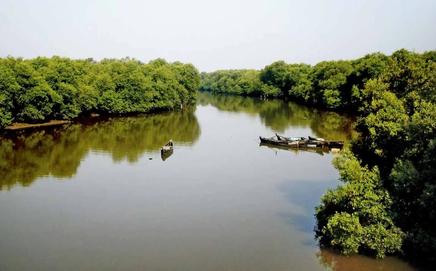
In a significant boost to efforts aimed at restoring a rapidly declining estuarine resource, the ICAR–Central Marine Fisheries Research Institute (CMFRI) has successfully achieved induced breeding of the mangrove clam (Geloina erosa) under captive conditions. The scientific breakthrough is expected to mark a major milestone in developing community-managed estuarine aquaculture models that are closely integrated with mangrove conservation. Mangrove clams, commonly known as mud clams, are an ecologically important but dwindling bivalve species distributed across mangrove and estuarine ecosystems in South and Southeast Asia. Despite their declining availability, they continue to be a valued local delicacy in several parts of India, particularly in northern Kerala, where the species is popularly known as 'Kandal Kakka'. The clam typically inhabits organic-rich muddy substrates in intertidal mangrove zones. Scientists from the CMFRI’s Mariculture Division successfully induced spawning in captive broodstock and completed the entire embryonic and larval development cycle under controlled conditions. The team recorded successful spat settlement from the 18th day after spawning, demonstrating the feasibility of producing viable seeds in a hatchery environment. The achievement represents one of the very few documented global instances of induced breeding, larval rearing, and spat production of the mangrove clam. Building on this success, CMFRI scientists are now working to standardise larval rearing and nursery management protocols to improve survival rates and enable large-scale seed production. According to the researchers, the development of robust hatchery technology, coupled with grow-out farming in suitable estuarine systems, could pave the way for low-input, environmentally sustainable aquaculture. They point out that hatchery-produced seeds can be used for ranching in degraded or critical mangrove ecosystems, thereby simultaneously supporting clam stock enhancement and mangrove restoration. The breakthrough is expected to open new avenues for sustainable livelihoods and nutritional security for mangrove-dependent communities, particularly along the Kerala coast. Farming initiatives based on hatchery-produced seeds could help restore depleted natural stocks, reduce pressure on wild populations, and provide stable income opportunities for coastal households. Across India -- especially along the east coast and in island regions, wild mangrove clam stocks have declined steadily due to indiscriminate harvesting, habitat degradation, pollution and coastal development. The absence of scientific stock assessments, size regulations and seasonal harvesting controls has further worsened the depletion, leading to visible reductions in both abundance and shell size. One of the world’s largest mud clams, capable of reaching shell widths of up to 10 cm, the species plays a crucial ecological role by recycling nutrients, stabilising sediments and strengthening mangrove ecosystems, while also underpinning food security and livelihoods in coastal regions. This story has been sourced from a third party syndicated feed, agencies. Mid-day accepts no responsibility or liability for its dependability, trustworthiness, reliability and data of the text. Mid-day management/mid-day.com reserves the sole right to alter, delete or remove (without notice) the content in its absolute discretion for any reason whatsoever.
09 February,2026 04:25 PM IST | Kochi | IANSA tigress has been translocated from the Pench Tiger Reserve to the Sahyadri Reserve in Maharashtra as part of an ongoing programme to strengthen conservation efforts and augment the big cat population in the Western Ghats, officials said on Friday. She is the third tigress to be shifted to Sahyadri under the programme, after two big cats that were earlier translocated from the Tadoba Andhari Tiger Reserve. The three-and-a-half-year-old tigress, T-123, was captured from Pench and handed over to Sahyadri reserve, in a 16-day exercise involving continuous monitoring and careful selection of a suitable big cat, strictly in accordance with prescribed protocols and scientific guidelines, officials said. T-123 had occupied a territory in the hilly terrain and dense forests of Nagalwadi (UC) and Saleghat Range in Pench, they said. The ecological features of this area closely resemble those of the Sahyadri Tiger Reserve, making T-123 an ideal candidate for translocation, the officials added. This story has been sourced from a third party syndicated feed, agencies. Mid-day accepts no responsibility or liability for its dependability, trustworthiness, reliability and data of the text. Mid-day management/mid-day.com reserves the sole right to alter, delete or remove (without notice) the content in its absolute discretion for any reason whatsoever.
07 February,2026 02:29 PM IST | Mumbai | PTIThe population of dugongs along the Tamil Nadu coast has been estimated at 270 by WII, and this signals a stable and thriving environment for the endangered marine mammals, a top state official said on Thursday. Supriya Sahu, Additional Chief Secretary of Environment, Climate Change and Forests said the recent assessment by the Wildlife Institute of India is "big news in wildlife conservation." "The findings indicate that the dugong population in Tamil Nadu is stable and doing well," Sahu stated. The estimation, she said was conducted in collaboration with the Tamil Nadu Forest Department and it identified 158 dugongs in Palk Bay and 112 in the Gulf of Mannar. "Together, these regions now host the largest viable dugong population in India," she added. She attributed the success to the Dugong Recovery Programme implemented by WII and supported through Compensatory Afforestation Fund Management and Planning Authority (CAMPA), alongside "proactive and sustained conservation efforts of the TN Forest Department". The report highlighted the confirmed presence of mother-calf pairs, which provides critical evidence of active breeding within the habitat, Sahu said. According to her, the report also highlights the Notification of the Dugong Conservation Reserve in Palk Bay, covering 448 sq km of core dugong habitat, by government of Tamil Nadu, as a significant milestone towards long-term protection of the species. "We are setting up India's first Dugong Conservation Centre at Manora in Thanjavur District, at a cost of Rs 40.94 crore with @worldbankgroup. This centre will serve as a state-of-the-art hub for dugong research, awareness generation, and community participation," Sahu added. The dugong, often referred to as the 'sea cow,' is a strictly herbivorous marine mammal that relies on seagrass meadows. It is currently listed as 'Vulnerable' on the IUCN Red List, making the stability of the Tamil Nadu population a significant boost for national marine biodiversity goals. This story has been sourced from a third party syndicated feed, agencies. Mid-day accepts no responsibility or liability for its dependability, trustworthiness, reliability and data of the text. Mid-day management/mid-day.com reserves the sole right to alter, delete or remove (without notice) the content in its absolute discretion for any reason whatsoever.
05 February,2026 11:05 PM IST | Chennai | PTIThe population of blackbucks in Odisha's Ganjam district has risen by 498 in the last one year, officials said on Wednesday, February 4. According to the census conducted by the Forest Department on January 29, the total number of blackbucks in the district stood at 9,287. The population was estimated at 8,789 in 2025, 7,273 in 2023, 7,358 in 2021 and 6,875 in 2020, officials said. Of the total population recorded this year, 5,832 were females, 2,104 males and 1,351 juveniles, they said. Locally known as 'Krushnasar Murga', the blackbuck is listed under Schedule I of the Wildlife (Protection) Act, and is categorised as vulnerable in the Red Data Book. The highest number of blackbucks, 5,972, was sighted in the Ghumusar South forest division, while the lowest count of 459 was recorded in Ghumusar North. Another 2,856 animals were found in the Berhampur forest division. Around 500 people, including wildlife experts, activists, academicians and college students, were involved in the census. They were divided into 123 units for the exercise. For the first time, the forest department also undertook experimental drone-based aerial monitoring with AI-assisted counting in limited areas, said Regional Chief Conservator of Forests Vishwanath Neelannavar. Improved habitat conditions, protection by local communities and sustained efforts by forest staff have contributed to the steady rise in the blackbuck population, said Vipasha Parul, the divisional forest officer (DFO) of Ghumusar South. "Locals believe that the sighting of blackbucks in paddy fields is a good sign," said Amulya Upadhyaya, president of the Blackbuck Protection Committee (Ganjam). He said villagers do not harm the animals even when they graze on and damage crops. Blackbucks, which were last sighted in the Balukhand-Konark Wildlife Sanctuary in Puri district in 2012-13, have since disappeared from the area. The Forest Department has started making efforts to restore its habitat in the sanctuary through translocation. DFO of Ghumusar North, Himansu Sekhar Mohanty, said four blackbucks were translocated from the area to Puri last year. This story has been sourced from a third party syndicated feed, agencies. Mid-day accepts no responsibility or liability for its dependability, trustworthiness, reliability and data of the text. Mid-day management/mid-day.com reserves the sole right to alter, delete or remove (without notice) the content in its absolute discretion for any reason whatsoever.
04 February,2026 03:25 PM IST | Berhampur (Odisha) | PTIA wild elephant was found dead on a railway track near the Walayar area in the early hours of Wednesday, February 4, forest officials said. They said the young adult male elephant died after being hit by a train. Upon learning of the incident, forest and railway officials reached the spot. Trains are operating at limited speeds through this forested area, and officials are investigating how the incident occurred. This story has been sourced from a third party syndicated feed, agencies. Mid-day accepts no responsibility or liability for its dependability, trustworthiness, reliability and data of the text. Mid-day management/mid-day.com reserves the sole right to alter, delete or remove (without notice) the content in its absolute discretion for any reason whatsoever.
04 February,2026 12:32 PM IST | Palakkad (Kerala) | PTIIn a rare sight, a peacock has been spotted in the snowy forests near Manali in Himachal Pradesh's Kullu district, officials said on Wednesday, February 4. According to forest department officials, the national bird was spotted in the forest area near the Jagatsukh village, approximately eight kilometres away from Manali at an elevation of 6893 feet. It was spotted by the locals and a video of the bird also went viral on social media. Rajesh Sharma, deputy conservator of Forests, Kullu said that upon receiving the information, officials reached the spot and found the bird in good condition. "Peacocks are generally found across the country, mainly in plain and areas with lower elevation. In Himachal too, peacocks are found at lower hills and plains, however, peacocks at higher elevations are very rare and it could be said that the rising temperatures and global warming are the reason for birds moving to such heights," he said. "This is not the first time that a peacock has been spotted in the area. They have also been spotted a few times before. Over the years, the climate and temperature here has generally increased and the bird might have found higher elevations habitable," he said. This story has been sourced from a third party syndicated feed, agencies. Mid-day accepts no responsibility or liability for its dependability, trustworthiness, reliability and data of the text. Mid-day management/mid-day.com reserves the sole right to alter, delete or remove (without notice) the content in its absolute discretion for any reason whatsoever.
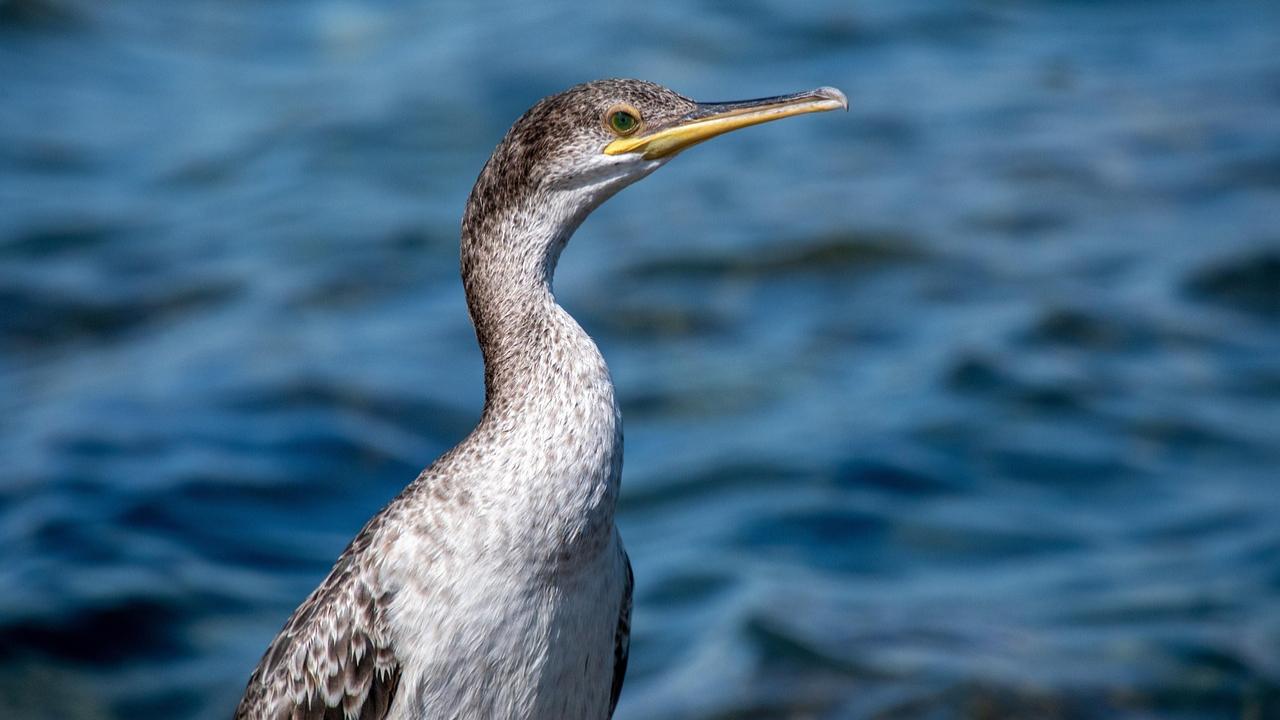
04 February,2026 12:22 PM IST | Shimla | PTILarge flocks of cormorants have been spotted in recent days at the estuary coastal area near Thoothukudi Port in Tamil Nadu. This estuarine region, where seawater and freshwater converge, offers a rich habitat with abundant fish and other aquatic organisms. As a result, cormorants are gathering here in large numbers in search of food. The sight of cormorants calmly floating on the water's surface and suddenly diving to catch fish has drawn the attention of nature enthusiasts. Especially during the early morning and evening hours, these birds can be seen actively foraging in groups, reflecting the rich biodiversity of the region. The increase in the number of cormorants is considered a significant indicator that the Thoothukudi Port estuary coastal area continues to remain ecologically balanced and naturally abundant. Last month, thousands of migratory Rosy Starlings arrived in Tamil Nadu's Thoothukudi district, particularly around Perungulam and Thamirabarani River areas, creating a spectacular aerial display. Speaking to ANI, District Forest Officer Ilaiyaraja said, "The Thoothukudi district, being a coastal district, encounters many migratory birds every winter. Recently, we have seen a large influx of Rosy Starlings in Perungulam and the surrounding areas. Rosy Starling belongs to the starling family. They breed in Central Asia and West Asian countries in steppe grasslands. During winter, since the weather is very harsh there, from July to August till April and May, they migrate to tropical regions like India." He further said that starting from Gujarat down South, the Rosy Starlings migration can be witnessed. "They stay here during the winter and go back to their native place after April and May. Thoothukudi has wetlands. Food availability and weather are the main reasons for their migration. This wetland and agricultural land, when combined, provide a better habitat for these migratory birds... We should be proud of that. This year, we can see that the count is largely increasing," he said. He further said that Rosy Starlings have to be protected ."As the birds are coming in large count the major prey is locusts and other insects. Starlings feed on locusts, they save the agricultural land of the farmers. They are providing a huge contribution to farmers," he added. The coastal area near Thoothukudi Harbour has turned into a busy hub of bird activity, with large flocks of water birds gathering in the estuary area of Thoothukudi Harbour Beach. This story has been sourced from a third party syndicated feed, agencies. Mid-day accepts no responsibility or liability for its dependability, trustworthiness, reliability and data of the text. Mid-day management/mid-day.com reserves the sole right to alter, delete or remove (without notice) the content in its absolute discretion for any reason whatsoever.
04 February,2026 12:14 PM IST | Thoothukudi (Tamil Nadu) | ANIIndian-origin climate scientist Veerabhadran Ramanathan has been awarded the 2026 Crafoord Prize in Geosciences by the Royal Swedish Academy of Sciences. Often described as the "Nobel of Geosciences," the prize recognises Ramanathan's decades of research on super-pollutants and atmospheric brown clouds, which have reshaped understanding of global warming. Ramanathan, 82, made a landmark discovery in 1975 while working at NASA: chlorofluorocarbons (CFCs), widely used in aerosols and refrigeration, trap heat in the atmosphere up to 10,000 times more effectively than carbon dioxide. "Until 1975, we thought global warming was mainly from COâ¿¿. I was shocked at the capacity of technology and human beings to change the environment," Ramanathan told the Royal Swedish Academy of Sciences. Born in Madurai and raised in Chennai, Ramanathan began his career as an engineer in a refrigerator factory in Secunderabad, where he first handled CFCs. He later earned degrees from Annamalai University and the Indian Institute of Science. His Indian roots informed his work in the Indian Ocean Experiment (INDOEX), which identified atmospheric brown clouds over South Asia. The study linked air pollution to a weakened Indian Monsoon and accelerated melting of Himalayan glaciers. Now, a Distinguished Professor Emeritus at the Scripps Institution of Oceanography, University of California, San Diego, he has also advised global leaders and the Vatican on climate ethics. The Crafoord Prize carries a cash award of 8 million Swedish kronor (approximately USD 900,000) and a gold medal. The award will be presented during Crafoord Days in Stockholm and Lund in May 2026. Ramanathan's work underpins key international treaties, including the Montreal Protocol, which has prevented millions of tons of harmful emissions from entering the atmosphere. This story has been sourced from a third party syndicated feed, agencies. Mid-day accepts no responsibility or liability for its dependability, trustworthiness, reliability and data of the text. Mid-day management/mid-day.com reserves the sole right to alter, delete or remove (without notice) the content in its absolute discretion for any reason whatsoever.
02 February,2026 09:45 AM IST | Houston | PTIJapan's last pair of pandas have returned to China, leaving Japan without the lovable bears for the first time in half a century. The bears are heading back as diplomatic relations between the two countries are at their lowest point in years over the new Japanese Prime Minister's stance on Taiwan, an island Beijing claims as its own, making it unlikely that there will be replacement bears. The twins Xiao Xiao and Lei Lei have an adoring fan base in Japan, where thousands of people flocked to Tokyo's Ueno Zoo ahead of their departure. China first sent pandas to Japan in 1972, a gift meant to mark the normalisation of diplomatic ties between the two neighbours. Beijing has long used the bears as a diplomatic tool: a sign of goodwill and an extension of the country's soft power, and one that it can retract when bilateral relationships turn adversarial. Images from state broadcaster CCTV showed the two pandas, Xiao Xiao and Lei Lei, arriving in crates in southwestern China's Sichuan province, where they will stay in quarantine at the China Conservation and Research Centre for the Giant Panda. The pandas arrived safely early Wednesday morning, the conservation centre said in a statement. Xiao Xiao and his sister Lei Lei were born in Tokyo's Ueno Zoo in 2021. While Beijing lends pandas to other countries, it maintains ownership over the animals, including new cubs. This story has been sourced from a third party syndicated feed, agencies. Mid-day accepts no responsibility or liability for its dependability, trustworthiness, reliability and data of the text. Mid-day management/mid-day.com reserves the sole right to alter, delete or remove (without notice) the content in its absolute discretion for any reason whatsoever.
29 January,2026 11:31 AM IST | Bangkok | APThe growing use of electric vehicles is already improving air quality in California neighborhoods, a new report said on Monday. Using high-resolution satellite data, the team reported the first statistically significant drop in nitrogen dioxide pollution linked directly to zero-emissions vehicles, showing that cleaner transportation is delivering real benefits today, according to the study by researchers at the Keck School of Medicine of USC. The study, published in The Lancet Planetary Health, analysed changes in air pollution levels between 2019 and 2023 as more Californians switched to zero-emissions vehicles, including fully electric and plug-in hybrid cars. Researchers found that for every 200 electric vehicles added in a neighborhood, nitrogen dioxide levels fell by about 1.1 per cent. Nitrogen dioxide is a harmful pollutant produced mainly by burning fossil fuels and is known to trigger asthma, bronchitis, heart disease and strokes. While electric vehicles are often promoted as a way to fight climate change in the long run, this research shows they are also making the air cleaner in the short term. Earlier studies using ground-based air monitors suggested a link between electric vehicle adoption and lower pollution, but limited coverage made the results uncertain. By using satellite data from NASA’s TROPOMI instrument, which measures air pollutants across large areas daily, the USC team was able to track changes in nearly every neighborhood in California. The researchers divided the state into 1,692 neighborhood-sized areas and compared electric vehicle registration data from the California Department of Motor Vehicles with annual nitrogen dioxide levels. Over the five-year period, a typical neighborhood added around 272 zero-emissions vehicles. Many areas saw even bigger increases, leading to noticeable improvements in air quality. Senior author Dr. Erika Garcia said the findings are important because air pollution affects health almost immediately. Traffic-related pollution can harm the lungs and heart both in the short and long term, making reductions especially meaningful for community well-being. Lead author Dr. Sandrah Eckel added that even though electric vehicles still make up a small share of all cars in California, their impact is already measurable. During the study period, zero-emissions vehicles grew from about 2 per cent to 5 per cent of all light-duty vehicles -- showing that much more improvement is possible as adoption continues. The study also highlights the power of satellite technology to track air pollution worldwide, opening new opportunities to study the environmental impact of clean energy policies. The research was supported in part by the National Institutes of Health and NASA, with contributions from scientists across USC, George Washington University, UC San Diego and community partners in Los Angeles. This story has been sourced from a third party syndicated feed, agencies. Mid-day accepts no responsibility or liability for its dependability, trustworthiness, reliability and data of the text. Mid-day management/mid-day.com reserves the sole right to alter, delete or remove (without notice) the content in its absolute discretion for any reason whatsoever
27 January,2026 10:06 AM IST | New Delhi | IANSKirtida Mekani, who came from Karnataka and became one of Singapore's most influential champions of environmental sustainability, community service and cultural heritage, has passed away after suffering a massive heart at home. She was 66. A recipient of the President's Award for environment work and an inductee of the Singapore Women's Hall of Fame in 2024, Mekani's legacy is woven into the island's green spaces, community gardens, educational institutions and cultural landmarks, reported online tabloid tabla! The sudden passing of "Tree Lady", as she was affectionately called, on January 19 has left a profound void in Singapore's environment, arts, and civic communities ' circles she shaped quietly yet decisively for more than three decades. Mekani's lifelong love for nature began in childhood on her family's farm in Karnataka. A simple yet transformative moment ' discovering how a "smelly" compost pit turned into fertile soil ' opened her eyes to nature's regenerative power. That early lesson stayed with her, shaping a philosophy that nature, if understood and respected, could teach humanity how to live sustainably. When she moved to Singapore with her husband Bharat Mekani in 1990, she was immediately struck by the greenery along the drive from the Changi Airport. That image, she often recalled, planted a seed that would later blossom into one of Singapore's most successful citizen-led environmental initiatives. In 1993, Mekani became the founding executive director of the Singapore Environment Council, where she spent four years designing and implementing more than 50 environmental protection and education programmes for schools, businesses, and communities. Even after stepping down, she remained deeply involved in grassroots environmental education, mentoring young leaders, and advising organisations. Her proudest achievement was the Plant-A-Tree Programme, launched in 2007 in partnership with Singapore's National Parks Board under the Garden City Fund here. The idea initially faced scepticism, with doubts over whether the public would participate. Mekani persisted ' convinced Singaporeans would respond if given the chance to connect personally with nature. She was right. Since its inception, the programme has seen over 76,000 trees planted, introduced more than 200 native species, and involved over 100,000 participants from all walks of life. It remains one of Singapore's most enduring citizen-driven green initiatives. Known affectionately as part of Singapore's "green couple", Mekani and Bharat combined business life with community service, quietly supporting causes through donations, volunteering, and board work. Mekani served on the Garden City Fund Management Committee and was an ambassador for Community in Bloom, a nationwide movement that now supports 1,900 community gardens cared for by 45,000 volunteer gardeners. Her philosophy was simple yet powerful: Sustainability must be lived, not lectured. Mekani served as a trustee of the United World College of South East Asia Foundation, supporting the Rainforest Restoration Project, where students run nurseries growing threatened rainforest species for replanting along Singapore's rail corridor. In 2016, she co-founded the Biomimicry Singapore Network, uniting scientists, designers, engineers and entrepreneurs to explore nature-inspired innovation, according to the weekly report. She also served on the board of World Wild Life (WWF) Singapore and as a trustee of the Botanic Gardens Conservation International, contributing to conservation efforts locally and globally, including marine conservation initiatives and coral restoration around the Kusu Island, off Singapore. She also served on the board of LASALLE College of the Arts and on the management committee of the Singapore Indian Fine Arts Society (SIFAS). SIFAS President K V Rao said: "Kirtida was a truly remarkable individual who endeared herself to everyone with her innate empathy for all living beings and the environment." An accomplished ceramist herself, Mekani also exhibited her artwork, embodying the belief that creativity and sustainability were deeply connected. Her work earned her the President's Award for the Environment in 2015, Singapore's highest environmental honour, and her induction into the Singapore Women's Hall of Fame as a Champion of the Environment in 2024. Mekani's husband Bharat told the tabloid, "Kirtida lived with a rare kindness and an unwavering sense of purpose." This story has been sourced from a third party syndicated feed, agencies. Mid-day accepts no responsibility or liability for its dependability, trustworthiness, reliability and data of the text. Mid-day management/mid-day.com reserves the sole right to alter, delete or remove (without notice) the content in its absolute discretion for any reason whatsoever
23 January,2026 12:27 PM IST | Singapore | PTIADVERTISEMENT









-1770454766612_d.png "She is the third tigress to be shifted to Sahyadri under the programme. File Pic")